What Happens to
Your Old IT Gear
What happens after your organisation retires a laptop, server or other IT equipment? This guide follows the process from collection and data-security treatment through assessment for reuse, recycling and final reporting.
For project-specific planning, see our server recycling guide and computer recycling for schools. The equipment, security requirements and agreed scope determine the appropriate pathway.
A Simple Breakdown of the E-Waste Recycling Process
When a business replaces laptops, servers, phones, or office hardware, most people never think about what happens to the old IT equipment.
Every device contains data, valuable materials, and — if disposed of incorrectly — environmental hazardous materials.
At Recycle IT, we follow a clear, compliant, and transparent process to ensure your old IT gear is handled securely and sustainably.
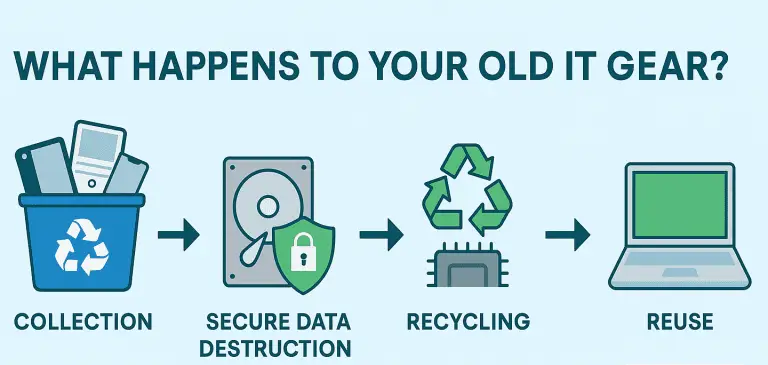
1. Collection
Once you book a pickup through our online form, our team collects your equipment using secure, GPS-tracked vehicles.
We accept:
Computers & laptops
Servers & networking gear
Phones & tablets
Printers & copiers
Cables, accessories & mixed e-waste
Batteries (lithium, lead-acid, UPS packs)
Every collection is logged and documented for traceability.
2. Secure Data Destruction
Before equipment enters a reuse or recycling pathway, data-bearing media needs an appropriate sanitisation or destruction process. The method depends on the media, its condition, the sensitivity of the information and your organisation’s requirements.
Our secure data destruction service can include Blancco-based erasure, verification records and physical hard drive destruction, according to the agreed scope. Confirm the certificates and asset-level reporting you require before collection.
For current guidance, see NIST SP 800-88 Rev. 2 and our data wiping versus physical destruction guide. Our AS 5377:2022 certification overview explains the separate standard for managing electrical and electronic equipment for reuse or recycling.
3. Recycling & Recovery
Devices that cannot be reused are processed to recover raw materials such as:
Copper
Aluminium
Precious metals (gold, silver, palladium)
Plastic components
Steel
This prevents e-waste from ending up in landfill and reduces the need for new mining.
A recycling certificate will also be issued.
4. Reuse & Circular Economy
Where possible, refurbished equipment is returned to the market to:
Extend product life
Reduce environmental impact
Lower the cost of technology for others
Reusing IT equipment is one of the best ways to reduce carbon footprint and resource extraction.

Why Responsible E-Waste Disposal Matters
Improper disposal of electronic waste contributes to:
- Data breaches
- Toxic chemicals in soil and water
- Battery-related fires
- Environmental damage
- Loss of recoverable precious metals
That’s why Australian businesses rely on Recycle IT for compliant, documented, and ethical recycling services.
Book a Collection or Request a Quote
If your business has old IT equipment ready for disposal, you can get an instant quote or book a pickup here